

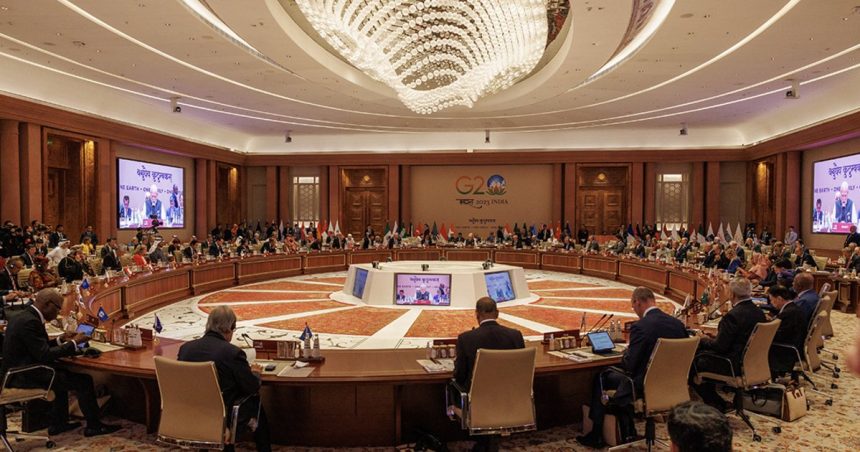
The Digital Power Shift in Global Leadership
In the 21st century, the lines between political power and corporate influence are blurring faster than ever before. Governments no longer hold absolute control over the global order — technology companies do. Giants like Apple, Google, Microsoft, and Amazon command influence that rivals entire nations. Their combined market value surpasses the GDP of most countries, giving them unprecedented sway over politics, economics, and even diplomacy.
- The Digital Power Shift in Global Leadership
- Tech Titans as Modern Diplomats
- The Economic Impact of Tech Alliances
- The Global South’s Digital Dilemma
- Geopolitical Tensions in the Digital Age
- The Role of Artificial Intelligence in Power Politics
- Celebrity Advocacy and Public Influence
- The Future of Digital Governance
- FAQs
- Conclusion
World leaders are recognizing that to remain relevant, they must collaborate — and sometimes compete — with these corporate powerhouses. From Washington to Beijing, the conversation has shifted from traditional trade deals to digital dominance. The new world order is no longer defined by borders and armies, but by data centers, algorithms, and artificial intelligence.
Tech Titans as Modern Diplomats
In recent years, CEOs of major tech corporations have become as influential as heads of state. Figures like Elon Musk, Sundar Pichai, and Satya Nadella attend global summits, shape policy discussions, and engage in private negotiations with governments. When Apple or Google decides to enter a market, it can change that nation’s economic trajectory overnight.
Elon Musk’s ventures in space exploration, artificial intelligence, and telecommunications have turned him into an unofficial ambassador of technological globalization. Meanwhile, Microsoft’s partnerships with national governments on cloud infrastructure demonstrate how corporations now shape international relations. These leaders don’t command armies, but their decisions influence energy policies, education systems, and global communications.
The Economic Impact of Tech Alliances
The collaboration between political institutions and tech firms has become an economic necessity. Governments rely on technology to manage public data, enhance infrastructure, and compete in the digital economy. In return, tech companies gain access to regulatory favor, public contracts, and market opportunities.
For example, India’s “Digital India” initiative has attracted investments from Google and Amazon, driving economic modernization and job creation. Similarly, the U.S. government’s collaboration with private firms in semiconductor manufacturing aims to reduce dependency on foreign supply chains. These alliances have become essential for maintaining economic stability in an increasingly digitalized world.
However, such partnerships raise concerns about monopolization and data sovereignty. When private corporations handle national information systems, the line between corporate service and political control becomes dangerously thin.
The Global South’s Digital Dilemma
While wealthy nations and tech giants dominate the digital race, developing countries face a growing challenge — technological dependency. Many nations in Africa, Asia, and Latin America rely on foreign companies for internet infrastructure, cloud computing, and cybersecurity.
This dependency limits local innovation and creates vulnerabilities in data ownership. Countries like Kenya and Nigeria are making efforts to build independent digital economies, but the scale of Western and Chinese investment makes true autonomy difficult.
As a result, the global digital divide is widening. Access to technology has become a form of modern colonization — where influence is measured not in land, but in data and algorithms.
Geopolitical Tensions in the Digital Age
Technology has become the new battlefield for geopolitical power. The rivalry between the United States and China over chip production, AI development, and 5G networks is not just economic — it’s ideological. Each side envisions a different digital future: one driven by open markets and democratic governance, the other by centralized control and state-driven innovation.
The European Union has emerged as a third force, focusing on digital regulation and ethical governance. Through initiatives like the General Data Protection Regulation (GDPR) and the proposed AI Act, Europe seeks to create a balanced framework that protects privacy while fostering innovation.
These differing philosophies are shaping a fragmented internet — often called the “splinternet” — where digital policies reflect political alliances. The internet that once united humanity is now being redrawn by political borders and ideological divides.
The Role of Artificial Intelligence in Power Politics
Artificial Intelligence is at the heart of this global transformation. Governments and corporations are racing to harness AI for military, economic, and social applications. From predictive policing to autonomous weapons and financial forecasting, AI’s influence is reshaping the global balance of power.
Nations with advanced AI capabilities will dominate future economies, while those without risk falling behind. The competition for AI supremacy has also triggered ethical debates on surveillance, bias, and human rights. China’s state-controlled AI surveillance contrasts sharply with the West’s decentralized, corporate-led model.
This AI arms race represents the new frontier of international competition — one where dominance is achieved not through firepower, but through algorithms.
Celebrity Advocacy and Public Influence
Celebrities, long central to pop culture, are now becoming influential voices in global tech and political debates. Public figures like Leonardo DiCaprio, Emma Watson, and Robert Downey Jr. use their platforms to discuss sustainability, digital privacy, and the ethics of artificial intelligence.
Leonardo DiCaprio’s climate activism has led to partnerships with tech companies developing clean energy solutions. Similarly, Robert Downey Jr.’s AI foundation focuses on environmental technology. Their involvement bridges entertainment and technology, transforming public awareness and shaping political pressure on global leaders.
As celebrity influence merges with tech advocacy, the global public becomes more engaged in issues once confined to diplomatic circles.
The Future of Digital Governance
The world is moving toward a hybrid model where governance involves both elected officials and corporate executives. Digital governance councils, AI ethics boards, and data privacy commissions are emerging as new centers of power. Nations are realizing that the success of democracy in the digital age depends on cooperation between policy and technology.
However, this integration comes with risks. The increasing concentration of data in private hands challenges state sovereignty. Who controls data — the government, the people, or the companies that collect it? This question will define global politics for decades to come.
FAQs
How are tech companies influencing global politics?
Tech corporations influence politics through infrastructure control, lobbying, and global partnerships that impact trade, communication, and national security.
Why are governments partnering with tech giants?
Governments rely on tech companies for modernization, cybersecurity, and AI integration — while corporations gain policy influence and market access.
Is the global digital divide growing?
Yes. Wealthy nations and major tech corporations dominate innovation, leaving developing countries dependent on external technology and vulnerable to digital exploitation.
Can celebrity activism impact global tech policy?
Yes, celebrity advocacy raises public awareness and pressures governments and corporations to adopt sustainable and ethical technologies.
What is the future of global digital governance?
A hybrid model combining government oversight with corporate participation is emerging, but balancing power and accountability remains a challenge.
Conclusion
The alliance between world leaders and technology giants marks the dawn of a new geopolitical era. Power is no longer measured solely by armies or territory but by control over data, algorithms, and innovation. This transformation presents both opportunity and risk — a world more connected than ever, yet more divided by access and influence.
As technology continues to evolve, humanity must ensure that digital power serves the public good, not private empires. The challenge lies in creating a balanced future where progress, privacy, and democracy coexist — and where technology enhances human freedom rather than controls it.